Permanent link03/10/2010
Recently, I was going through a pile of old school papers in a box my mom dug up in our basement and I found a piece I wrote back in the seventh grade. Reading it, was a nice walk down memory lane. If you’re feeling nostalgic for your childhood as I’ve been lately, then keep reading. If I do say so myself, I think it shows amazing promise for little twelve-year-old me, waxing poetic. I think it all still rings true!
"A Wish” (1991)
"Throw your dream into space like a kite and you do not know what it will bring back... a new life, a new friend, a new love or a new country." -Anais Nin
Let the dream sift away, like a lost memory. Then open your eyes, so you can reveal freedom or equality. Maybe the past or future shows.
Open up yourself. Explore new places. Let your mind just drift away. Then your wish will come true. Let yourself sit on the wish. Hold it with your heart's content. Dream and think about the wish all the time. Involve it, love it, and want it. Make it your best friend. Believe in it completely. Soon, you will be bleeding in a goodness that your desire has let you be. Now you're ready for anything.
When you make a wish, at first you believe it and want it, but then many times wishes get caught in knots, and then float in the deepest sea. A wish will not work this way. It must be kept in your insides, hidden away, but not forgotten. It must be loved. If you let it reside within you, you will soon obtain it. Then it will become real.
Wishes bring a lot. They may show you the future while you remain in the past. They may bring you "a new love, a new country, a new life, or a new friend." They may bring good or bad. Who knows exactly what they may bring. That is up to the dreamer.
When did you first wish for that special thing you longed for? Was it last Monday, a week ago, a month, or even a year ago? Did you forget your wish or did you keep in touch with it? If you forgot about it, you must revive it and bring it back to its full stance. After awhile, you will realize what has happened. The wish has revealed itself and become its true fantasy.
Next time you wish you will have this in mind. You will remember that if you follow these guidelines, your wish could be anything you would like. Then you will see that imagining can bring what you want and need, but only if you believe in it. A wish brings its coming on its own...
Permanent link03/09/2010
Hanging out at my birthday party with my BFF, Lauren
I wish I could recruit for a new best friend in town.
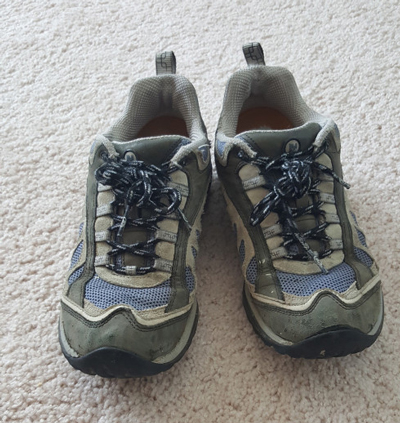
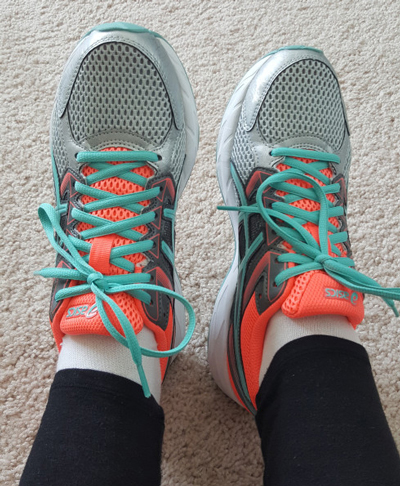
My closest friend Lauren just moved out of Chicago this winter and returned to her hometown of Miami with her husband and toddling daughter to live near Lauren’s parents. She’s my best friend of 15 years so whoever you are, New Best Friend, you’d have big shoes to fill—literally. Lauren wears a size 11.
I realize my recruitment sounds a bit like Paris Hilton’s MTV reality show called “My New BFF,” in which she auditions people across the world to become her closest pal.
New Best Friend, I promise you this is where the similarities between Paris and me end, and I’ll refrain from using the acronym “BFF” after I finish this column.
But to fill Lauren’s shoes, you’d have to meet high expectations.
Like Lauren, you’d have to be versatile—game for joining me for Cubs games, Oprah shows, Friday night Shabbat services, a range of movies from “Valentine’s Day” to the Michael Jackson documentary, wine tastings, the Art Institute, and, of course, Ghiradelli’s chocolate/ice cream parlor.
You’d laugh at my jokes even when they aren’t funny.
Oh, and when I’m on a blind date, I’d text you from time to time from the bathroom with either a “I like him!” or a “He asked me to pay for his coffee and was mean to the waitress!” Then you’d text back with a loyal and motivating line, either “Yay, can’t wait for the wedding!” or “You’ll write a book about it one day!”
Most of all, like Lauren, you’d just be there for me—and I the same for you.
Lauren and me…The Graduates.
But even while I’m wishing for a new best friend, I know I’m not alone. After all, Lauren is one of many making an exodus these days.
In fact, Americans are the most mobile people in the world, moving on average every five years so many of us are forced to make new friends, and often. Fittingly, I read this statistic in “Marie Claire” magazine while waiting for a flight at O’Hare to visit loved ones across the country.
American Jews are no exception in this transient society. Recently, I’ve noticed several of my other Jewish friends moving back to their hometowns too after spending their young adult years here in Chicago.
Back when we were 18, it was exciting and a little sad that, for so many of us, growing up meant moving away from our hometowns and families—our nests—to discover who we are as independent adults in big cities like Chicago.
The 2000-2001 Metropolitan Chicago Jewish Population Study reports that some 46,000 Jews, ages 22-35, live in the Chicago area, about half of whom, 23,500, weren’t born in Illinois.
We made a home for ourselves in this city, this large melting pot of 20- and 30-something transients. We were each looking for a more urban experience, a city packed with young people, a thriving Jewish community, a compelling career, and maybe a Jewish mate.
But now, as we settle into the next stages of life, some of us are leaving the big city behind—returning home to raise kids near family, taking better job opportunities, and embarking on suburban life. That’s also both exciting (especially for grandparents) and a little sad too.
Now that I think about it, though, maybe I don’t need to find a new best friend. After all, there’s Skype, there’s e-mail, there’s good old-fashioned phones, and airplanes too.
It’s a fact of life that people move away. But if you’re lucky, your closest friends will stay with you forever—they’ll still be there for you no matter where they live.
Want to make some new friends on Passover? Join Sidney N. Shure Kehilla for the first 1st Night Young Adult Seder on Monday, March 29, 7pm @ Temple Sholom 3480 N. Lake Shore Drive $25 before March 20, $36 after at
www.shurekehilla.org
Kosher for Passover Dietary Laws observed. Open to all Jewish backgrounds.
For more info, email
Kehilla@gojcc.org
or call 224-974-9090. Sponsored by Sidney N. Shure Kehilla - Making Jewish Connections in Chicago for those in their 20s & 30s! Sidney N. Shure Kehilla is a partnership of JCC of Chicago, Anshe Emet, Anshe Sholom B'nai Israel, Temple Sholom of Chicago, Emanuel Congregation, and Or Chadash.
Permanent link03/08/2010
Fridays are frenetic, frantic and leave me frizzled! I run around like a maniac so that I can rush home to make an elaborate dinner for my family and friends. I don’t usually question if I could be doing a better job of “doing a Friday,” I just accept it and run around trying to make it all happen.
Several weeks ago I had a weak moment. I woke up on Friday morning at 5 a.m. and ran downtown to my kitchen at Spertus Institute of Jewish Studies, got my work done, jumped back in the car and sped up north to pick up my son Jonah from school and stopped at the grocery store to get the few items I needed to round out the Shabbat meal. All was going well…until the trip to the store—I bought a challah! I had not started my dough that morning or Thursday night. I was tired, frazzled, fschizzled (as Jonah would say) and just not in the mood.
Let me say before I go on—we always have homemade challah on Friday night. It’s like the mail service—through snowstorm, blinding rain, extreme heat and whatever else….we will have homemade challah. Except that one day.
The challah was made at a local kosher bakery and shipped directly to my regular grocery haunt. I knew something was wrong the second I picked up the offending item. It was light as a feather. Too light. Not normal. I was rushing and blowing through the store—I had no choice.
Table set, dinner ready, dessert divine (as always) and the challah was really scaring me. It was unnaturally brown but without the crust, it weighed next to nothing and smelled faintly of fake vanilla. You know that smell, the one that is usually associated with soft serve ice cream. Sort of vanilla-y, but not really.
Candles, blessings, wine etc….and the moment of truth. Awful! No texture, no density, no flavor other than the fake vanilla and worst of all, NO SOUL! We joked about it, discussed whether or not I was losing “it” and ate the meal. I was seriously upset. I bought another one the next week as an experiment (I made the real one). I inspected it closely. It was made up of a fine network of gluten strands and air. I pushed it down and it made a ‘swoosh” sound and bounced back up. I did it again and the same thing happened. Over and over again the challah defied the laws of physics. I put it back in its plastic bag and enjoyed the dinner with our homemade challah.
I sort of forgot about the challah until a few days ago. I had stuck it in the microwave (to me it is a bread box-I never use it) out of sight, out of mind.
The challah had not changed. It was still the same. It did not mold and still defied physics. This was one sturdy little challah, which is not normal and not good.
In Chicago we boast a major Jewish community. Why can’t we get a decent kosher bakery? The breads have no heart. I buy breads for events all the time. It is hit or miss. I am concerned as to why we don’t have an artisanal bakery. I am thinking of gorgeous baguettes all crispy and crusty and NATURAL brown colored. How about challot that are dense and heavy with eggs, bread flour, honey and natural fats-say oil for example? This is a trend folks. Not a fad. Great bread is in! A good baguette is the new black this year. How about it? When did the amber waves of grain become synonymous with soulless, artificially flavored puffballs of dough? Am I the only one who is upset by this? Does anyone else see the difference in the great breads out in the world and the wretched loaves we get? Seriously, walk by a bakery or look one up on line, call me for examples and check out what everyone else is eating.
As we approach Pesach and purge our kitchens from flour and grains, we also should do some serious spring cleaning of another kind. Let’s all agree to stop eating what isn’t good for us, doesn’t taste wonderful and is made with less than great products. Just because it has a hechsher does not mean it is quality.
Permanent link03/05/2010
The stash
My addiction began when I was 14, and I can remember it almost down to the day; it was one week after 8th grade ended. See, I spent quite a bit of 7th grade and all of 8th grade thinking really dark lip liner and white lipstick was a really good look for me. And I bet it was. Along with my baggy jeans, tight short shirts and sexy strands, prowling the mall on Friday nights. But that’s a whole other story.
I finished 8th grade and it dawned on me: I’m kind of an idiot and should stop dressing that way. First thing to go was the lipstick—but for all that time I was so used to slathering the stuff on my lips every class period, (had to look good for chorus… those boys were so fly) I felt naked without something on my lips. I tried turning to my old standby, ChapStick. Me and cherry ChapStick go way back. We used to sneak off to the spare bedroom when I was seven, and I’d think it was candy and try to eat it. I’d get mad it tasted like petroleum jelly, but we’d always kiss and make up later. But, after white lipstick topped with a little vanilla Bonne Bell, I felt much too classy for boring ChapStick. This is when the hunt began. The hunt for the perfect lip balm.
I started at the very top of the teenage totem pole. Bath & Body Works. They had those fat tubes of lip balm. One was a sort-of-minty flavor, and it was white, so I went with that because it reminded me of my sticky past. I didn’t like it. At all. But I couldn’t stop using it. I’d be putting that stuff on every 15 minutes. The pockets of my not nearly as baggy jeans took a beating. They were fraying in the shape of a tube of lip balm in all five pockets.
At this point in my balm addiction, I was buying two tubes a week, but it’s not like I was flying through them. They were just piling up because I never found my beshert, so I’d ditch it and move on. I found one that was close. It smelled like a cherry popsicle stick. Not the popsicle itself, but the stick when you were finished eating it. It was hard to find and when Kroger stopped carrying it my nights became restless and my lips dried out in seconds. You know the feeling. When your lips are so dry they hurt and licking them only makes it worse but you can’t stop licking them. I needed a new balm.
And then that miraculous day came four years later. Wal-Mart was the only place that had it, ChapStick Lipsations strawberry kiwi. And it was so strange because in the beginning of this whole hunt I had immediately turned away from ChapStick and it ended up being beshert. Was there a lesson learned here? This was a tube-shaped miracle. I’d buy six at a time, and I had people across the country as far as San Francisco buying it for me. As soon as I discovered it, there was a weight lifted from my lips. I could focus on important things again. Like less baggy jeans and longer T-shirts.
In the past eight years since I found my true ChapStick love, I’ve calmed down about lip moisturizing. Good thing because it’s been discontinued. I’ve moved on. I still look for it whenever I go to Wal-Mart, but I know it won’t be there. And I’m ok with that. I still regret not stock piling several years worth, but it’s ok. Really. I’m fine. I’ve moved on. Really.
Permanent link03/04/2010
What if I told you, you could eat bread, pizza, potatoes, wine and pastries and still be thin? Oh, and you can eat dinner at 10 p.m. Carbs, alcohol, sugar and some more carbs do not add up to a diet most people think of as healthy. Dr. Atkin’s would be shocked.
I just got home from a once in a lifetime vacation to Spain with my wife. We had an amazing trip filled with walking, sightseeing and food. Hey, a trainer on vacation can eat chocolate. Okay, so I didn’t just eat chocolate; I ate a waffle covered in chocolate. At least I didn’t add the gelato. What surprised me the most, aside from the amazing Gaudi architecture, was the way people ate. A typical Spanish diet:
Breakfast 10 a.m.:
Coffee and a roll with butter and ham
Lunch 2 p.m.:
Fish, rice, veggies, wine
Followed by Siesta (nap)
Snack 5 pm:
Pastry and a Coke (10 ounces)
Dinner 9-10pm:
Tapas: fried salted potatoes, bacon wrapped around pretty much anything, a small salad with lettuce, chicken, tomato
2-3 glasses of wine
In all of Spain, I saw five overweight people, and two of them were wearing Pittsburgh Steelers paraphernalia. Most Europeans were thin, eating a diet high in carbohydrates and light on the protein. Now this is not a horrible diet, but not remotely close to what you would think a fit person would eat. Side note, I don’t condone drinking at lunch or eating fried foods (I am a sucker for a good pastry though). At this point, you are probably asking yourself, why are the folks of Barcelona so skinny?
The biggest, number one, most important detail you should walk away with after reading this is you need to have an active lifestyle. At 9 p.m. on a Monday night, the streets were flooded with people of all ages. The only time the streets were quiet was during siesta. People were not sitting in front of the tube waiting for Gossip Girl; they were out, walking around. A few other important things I noticed:
• NO CORN SYRUP IN SPAIN (not in the Coke, not in the chocolate…)
• 2-5 is Siesta time, people eat, sleep and then go back to work
• Public transportation is great but the stations are huge requiring lots of walking
• Every few blocks there is a little market selling fruit and vegetables
Aside from the massive amount of bacon and ham, there’s not a lot of processed food. There’s a big debate about whether high fructose corn syrup is good or bad for you, but in general, if you avoid products with corn syrup you’re eating less processed food, which is definitely better for you.
Spanish food was calling my name
Let me wrap this up—get moving! It doesn’t matter if it’s at the gym, on the street or around town. Get together with some friends and cook a great meal. I might be interpreting this wrong, but siesta time reduces stress, so look for ways of reducing your stress— meditate, drink some relaxing tea or just take a nap. Adios!
Permanent link03/03/2010
Ariel with Rabbi Isak Asie, Serbia’s only rabbi
I recently returned from a whirlwind visit to Belgrade, Serbia. I ended up in Belgrade sort of randomly, after my friend Marissa invited me to join her for a weekend in Athens. We were discussing adding on to our trip in Europe, and Belgrade quickly became our number one choice; Marissa works for Rasky Baerlein Strategic Communications in Boston and one of her accounts is the Serbian Import and Expert Promotion Agency (check out an editorial she helped get placed in the NYT).
At first mention of Serbia, I thought of the American Jewish Joint Distribution Committee (JDC). As an employee of JUF, it’s extremely important to me to see how the dollars we raise are used. About half of the money JUF raises each year stays in Chicago and the other half is distributed abroad (mainly through two organizations, JDC and JAFI, the Jewish Agency for Israel). The JDC works in over 70 countries today, rescuing Jews in danger, providing relief to those in distress (they are doing amazing work in Haiti right now), revitalizing overseas Jewish communities, and helping Israel overcome the social challenges of its most vulnerable citizens. I know what JDC is all about through my work, but wanted to see it in action.
Prior to my visit to Belgrade, I emailed Ela, the JDC contact in Belgrade, who went above and beyond to make sure that Marissa and I had everything arranged for our trip. In addition to agreeing to show us around, she offered to book our hotel, pick us up from the airport and arrange a tour for us around the city!
Ariel (right) and Marissa with Ela
The Jewish community in former Yugoslavia was majorly affected during WWII and about 60,000 Jews were killed in this region. Roughly 10,000 Jews lived in Belgrade before the Holocaust, and only around 2,000 Jews presently reside there. The only synagogue in Belgrade today was used as a night club and brothel during WWII. Our first stop on the Jewish Belgrade tour was this synagogue (Beit Haknesset Sukat Shalom) which also serves as a community center offering programs for the older adult community (which serves many Holocaust survivors), adult/student/youth activities (clubs and weekend programs), a kosher kitchen (the only kosher kitchen in Belgrade), and the center of Jewish activities in Belgrade. While at the center, we met with the program coordinators, attended an elderly event with a comedian (although we couldn’t understand the jokes since they were in Serbian, we heard it was very funny), purchased local crafts made by some of the women in the community, and ate lunch with several of the leaders in the Jewish community.
Ariel (right) with the Belgrade synagogue’s program coordinators
We also had the incredible opportunity of not only meeting Serbia’s only rabbi, but spending most of the day with him. Rabbi Isak Asiel serves as the community’s leader; running the services, butchering animals, conducting funerals, teaching classes, and serving as a public figure for the Jewish community. We went with the rabbi to pick his daughter up from school and ended up on a tour of an old Jewish area in Belgrade. Remnants of Jewish artifacts and writings can be found in the neighborhoods that were once predominately Jewish. We passed a public school and the rabbi showed us a plaque that read “The computer lab in this school is donated and supported by JDC.” I was shocked and proud to see the far-reaching scope of JDC’s efforts. I was impressed to see JDC on the wall of this public school providing non-sectarian long-term development assistance in Belgrade. The rabbi then began to tell me some of the specific things that JDC supports in the Jewish community, including financial assistance for the synagogue remodeling and money for Shabbat dinners, and I was beyond impressed. Our tour ended with a visit to a mosque. The rabbi wanted to stop by and introduce us to his good friend the imam. As we walked back to the synagogue, he told us how important it is to him to build relationships with the Muslim and other minority communities.
The Jewish community in Belgrade has come a long way, yet there is still a lot of work to do moving forward. I was impressed to see that despite the many challenges (including the Holocaust and the hardships of living in a nation plagued by many wars in the 1990s) the Jewish community in Belgrade is fighting to remain strong. In recent years they have worked to create an amazing community center and programs that strengthen individual and collective Jewish identity.
This community’s hospitality and welcoming attitude toward us epitomized the strength of the Jewish community worldwide. I have never felt so comfortable and welcome anywhere in the world, besides Israel. This reminds me of the saying: “Kol Yisrael arevim zeh bazeh (All Israel is responsible for one another).” Not only does this saying describe the way we were treated in Belgrade, this exemplifies the mission of JDC and how they operate. The work that JDC conducts daily exemplifies the Jewish way of thought, the idea that we are responsible for one another. I am proud to be a part of a community that cares for people worldwide and feel fortunate to have had the experience to visit the unique and wonderful Jewish community in Belgrade.
Permanent link03/02/2010
My grandfather, who had celebrated his 100th birthday last November, died this February. I was asked to speak at his funeral.
In preparing my grandfather’s eulogy, I recalled what I knew of his life’s story: Born in the Old Country. Lost most of his family to the Holocaust, which he survived by escaping a labor camp and fleeing to the woods. Married, then moved to a displaced person’s camp, where my mother was born. Immigrated to America, worked as a carpenter while my grandmother took in boarders. Ultimately had four daughters, all of whom graduated college and started their own families.
A remarkable story, yet I had heard so many like it in my own lifetime that I wondered if I should even tell it at the funeral. Hasn’t a similar story— Holocaust survivor comes to America and starts a new life— already been the subject of endless movies, plays and memoirs?
Which is when it dawned on me— the reason we take that generation’s resiliency so for granted may be that it seems so typical. My grandfather’s story is all the more remarkable for being so common.
Sure. To us, now. But at the time, it could have gone either way.
At the time, there was no guarantee that the Holocaust survivors would be able to rebuild their lives. But today, we have heard story after story of Holocaust survivors thriving in their new country.
We hear, again and again, the tale of those who went to the nascent nation of Israel and “made the desert bloom.” We hear, over and over, the saga of those who got trapped behind the Iron Curtain and kept the sparks of Judaism alive under the smothering Soviet flag.
While we see these outcomes as inevitable now, none of them were guaranteed at the time… any more than there was a guarantee that America would have survived the Great Depression, or that Hitler would have lost.
The American generation— millions of whom are Jewish— who did endure the Depression and defeat Hitler is now known as the “Greatest Generation,” in part thanks to a book about them by Tom Brokaw. And their achievements are certainly remarkable. But my grandfather, while their contemporary, was not part of that story. He spent the 1930s in then-Czechoslovakia, and he did not arrive in America until after WWII was over.
But that only means that he is part of a different “Greatest Generation.” Millions of Jews fought for survival within the death camps, fought armies to establish Israel, and fought oppression in the Soviet Union. They were not necessarily American, but these astonishing people also found deep reservoirs of hope and resourcefulness in hellish situations.
Few of these Jews are known by name, but cumulatively, they form a generation worthy of reverence. The fact that there are so many Jews with these stories does not render them cliché at all. It elevates them to the level of historic significance.
Together, these are not stories of what some Jewish people did. This is the story of what The Jewish People did.
Certainly, the achievement of enduring the Depression to defeat the Nazis is equaled by that of enduring to the Holocaust to build new lives in America and a new country in Israel. Apologies to Mr. Brokaw, but Jews of non-American extraction also have a Greatest Generation.
A man comes to a new land with his new family… he does not speak the language… all of his children become self-sufficient. Within one generation, a regeneration.
Maybe the story is common. But there is no reason it had to be, and it is therefore a thousand times more awe-inspiring for being common. As often as this story is repeated, it never fails to impress.
I miss my grandfather. Maybe he was not an historic figure like JFK or Walter Cronkite, cited in Brokaw’s book. Or even Elie Wiesel or a David Ben-Gurion. But my grandfather’s efforts, alongside those of the millions of Jews like him, stand as an eternal inspiration. He was part of a Greatest Generation, too… parallel in time, equal in honor.
|
Recent Posts
Archive
Sites We Like
|
|
|
Featured Event
 1 in 5 Ashkenazi Jews is a carrier of a "Jewish" genetic disorder. With a simple blood test, find out if you're at risk for passing on a debilitating, if not fatal, genetic disorder. If you're thinking about starting a family, now's the time to learn your risk - and your options. Tuesday, March 16 from 6:30-9:30 p.m. at Congregation Beth Shalom, Northbrook and Wednesday, May 5 from 6:30-9:30 p.m. at Chicago Sinai Congregation, Chicago  For entry to mid-level Professionals
Friday, April 16 at the Standard Club A Job Fair preparation workshop will be held from 9-10 a.m. Interactive panel presentations and career workshops will be held at 11 a.m., 12 noon and 1 p.m. Job seekers will have the opportunity to receive career counseling and resume help throughout the day at the Career Services Help Desk. If you are interested in having your company represented at the JUF/JVS Job Fair, please view Employer Guidelines and contact Lainie Kaufman at tip@juf.org or 312-444-2826. Register online here.
|
|